Finishing Your Basement This Winter? Get the Walls Right First
Winter is when a lot of folks around Philadelphia and New Jersey finally tackle the basement. It's too cold for outdoor projects, the kids need somewhere to hang out, and that unfinished space downstairs starts looking like a free extra room.
Here's the thing, though. The part of a basement remodel that matters most is the part nobody sees once the drywall goes up. Get the walls wrong and you end up with a room that's always chilly, smells a little musty, and sometimes grows mold behind the paneling. Get them right and it's one of the most comfortable rooms in the house.
Why basements are tricky
A basement wall isn't like an upstairs wall. It's concrete or block that sits against cold, damp soil. In the winter, that wall stays cold. When warm, humid air from the house touches it, moisture condenses right on the surface.
Now picture the old-school way of finishing a basement: frame a stud wall, stuff fiberglass batts in it, staple up plastic, and hang drywall. Warm air still finds its way through the gaps, hits that cold concrete, and turns to water. The fiberglass soaks it up, the plastic traps it, and the wood framing sits in it. A few years later you pull off a piece of drywall and find a mess.
We see this a lot in older homes around Philly and across New Jersey, especially in block foundations and stone foundations that were never meant to be living space.
What you can check before you start
- Look for water first. Check for damp spots, white chalky stains (that's efflorescence, or mineral deposits left by water), or puddles after heavy rain. Insulation won't fix a leak. Grading, gutters, downspouts, or waterproofing come first.
- Feel the walls on a cold day. If the concrete feels cold and clammy, that's what your new room will be up against.
- Check the top of the wall. The rim joist, where the house framing sits on the foundation, is often the leakiest spot in the whole basement. If you feel a draft up there, that's a big part of why the space is cold.
- Make a plan for the mechanicals. Know where the furnace, water heater, and electrical panel are staying so the framing and insulation work around them.
Where spray foam helps
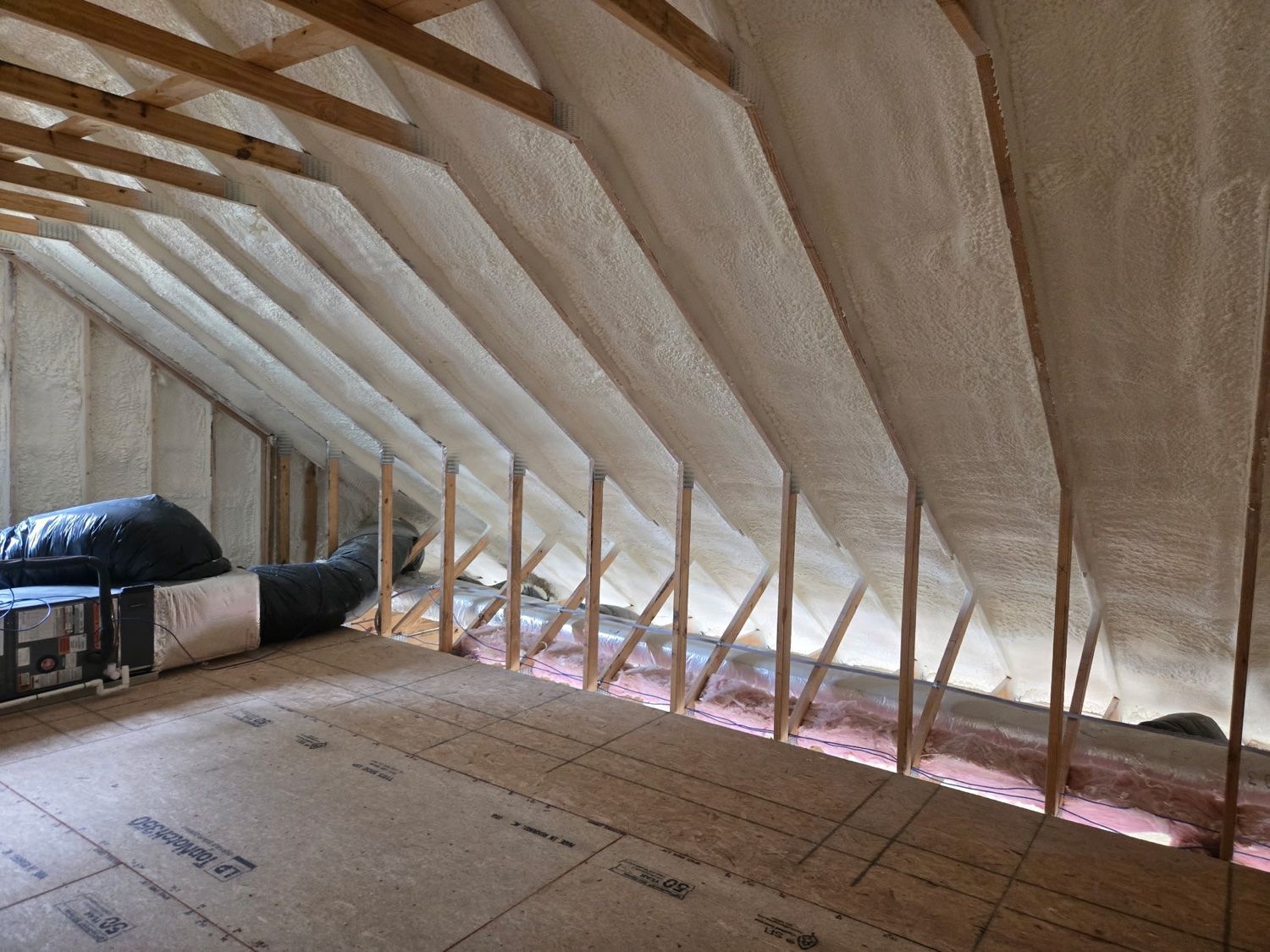
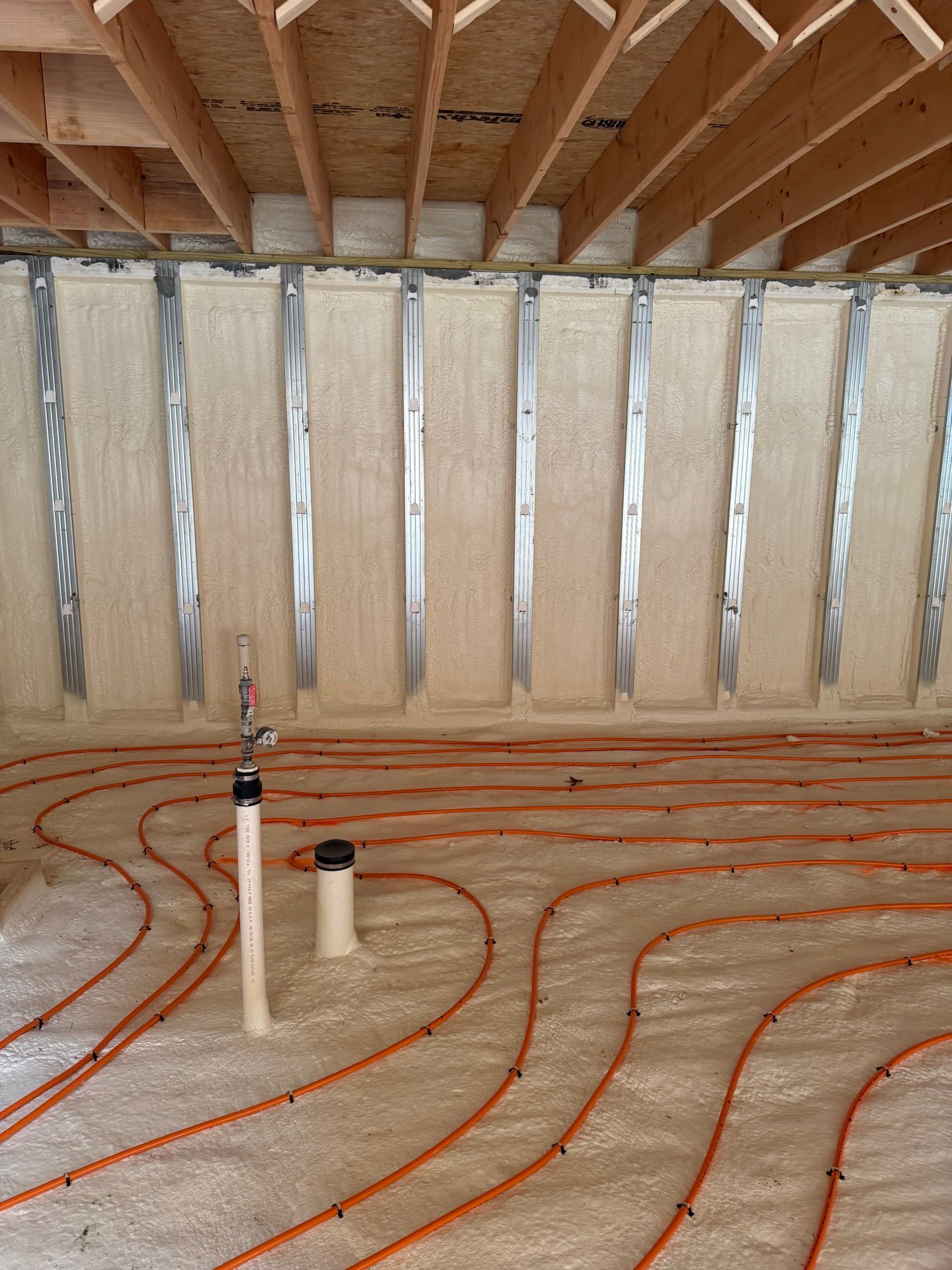
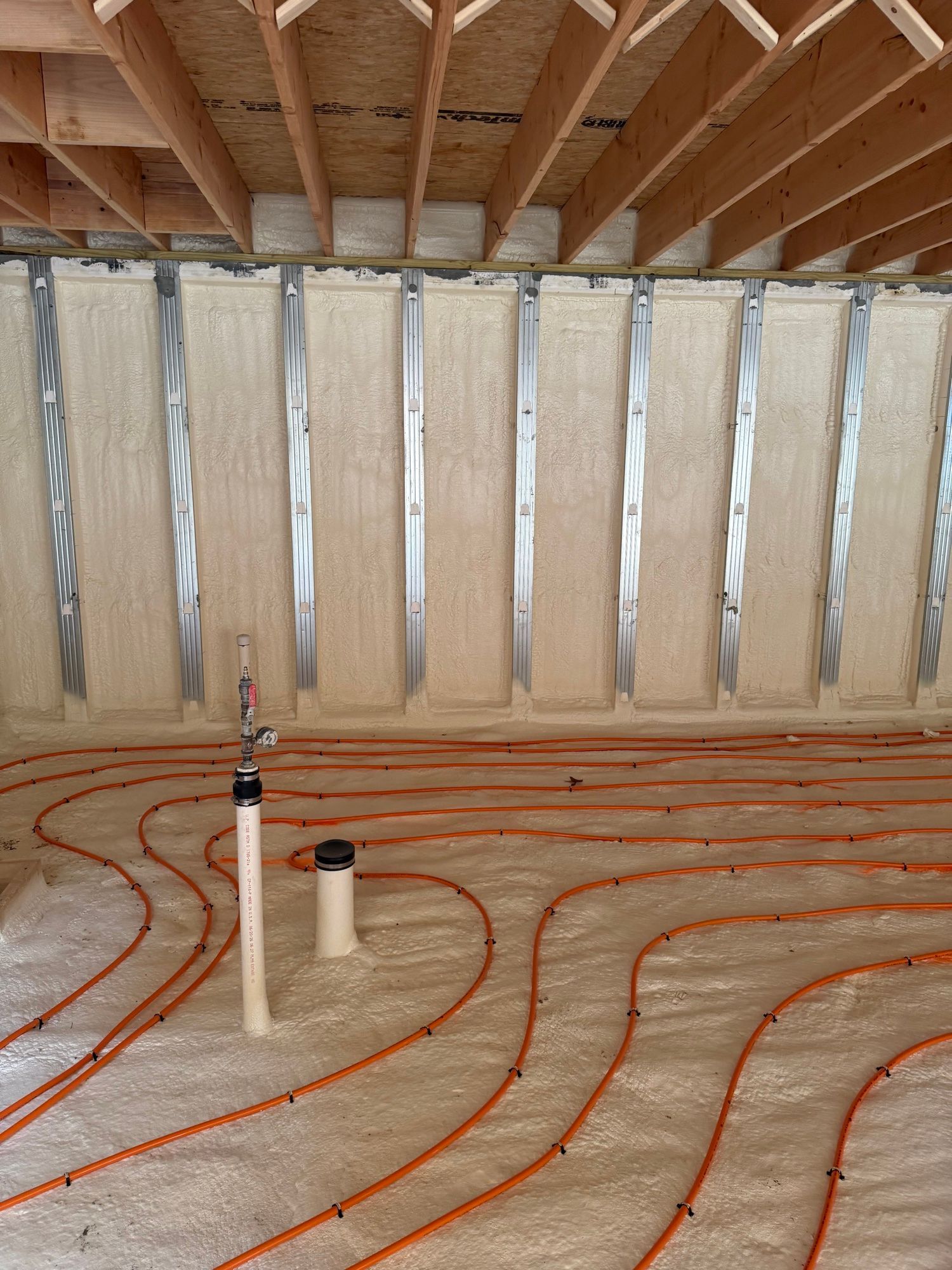
Closed cell spray foam is a great fit for basement walls because it does several jobs in one pass. It sticks right to the framing and seals the gaps, so warm, moist house air can't reach the cold concrete. Closed cell foam also resists moisture much better than fiberglass, so it isn't going to act like a sponge. And it gives you a lot of R-value in a thin layer, which matters when you're trying not to give up floor space.
We use PolyCon PC 2000 closed cell at R-7.1 per inch. A couple of inches on the walls makes a big difference in how warm the room feels, and we'll seal the rim joist in the same visit.
Some basements have spots where open cell makes sense, like interior walls for sound or a joist ceiling between the basement and the first floor. There we use PolyCon PC 450 open cell at R-3.9 per inch, which is softer, quieter, and easier on the budget. We'll tell you honestly where each one belongs.
The order of operations
If you're planning a basement remodel, here's how it usually goes:
- Take care of any water issues.
- Frame your walls, usually with a small gap off the concrete.
- Run your rough electrical and plumbing.
- Call us to spray the walls and rim joist.
- Get your inspections done, then hang drywall.
Drywall matters for more than looks. Spray foam needs to be covered with drywall or another approved covering in living spaces, so plan on that as part of the job. Your contractor or local building department can tell you exactly what your town requires.
One more tip: when a basement gets sealed up tight, it's smart to have your heating contractor make sure the furnace and water heater are venting the way they should and getting enough combustion air.
Why now
Basement projects are a perfect winter job. We can do the walls while it's cold outside, and the room is ready to finish long before spring. Plus, sealing the walls and rim joist helps the floors above feel warmer this winter, even before the remodel is done.
About us
Sunrise Valley Spray Foam is an owner-operated company based in Morgantown, PA. An owner is on every job, so the people quoting your project are the same people doing the work. We travel regularly to the Philadelphia area and New Jersey for homes, barns, and commercial buildings.
If you're planning to finish your basement this winter, call or text us at 717-892-8212, or hit the Free Quote button. We'll come take a look and give you a straight answer.
You might also like