Want to Use Your Shop This Winter? Stop Heating the Outdoors First
Where the heat goes in pole barns, garages, and metal shops, and how spray foam fixes it
Every fall we hear some version of the same story. Somebody in Bucks County or South Jersey has a great pole barn, detached garage, or metal shop. It's where the truck gets worked on, the woodworking happens, or the side business lives. Then December shows up, and the shop turns into a walk-in freezer.
They buy a bigger heater. The heater runs all day. The propane or electric bill climbs. And they're still working in a coat and gloves.
The heater usually isn't the problem. The building is.
Where the heat is going
Most shops and pole barns were built to keep rain off, not to hold heat. Here's what we typically see when we walk one:
- Bare metal roofs and walls. Steel moves heat fast. Whatever warmth your heater makes goes straight up and out through the roof panels.
- Gaps everywhere. Around the eaves, at the ridge, where wall panels meet the base, and at every seam. Each one lets cold air pour in while warm air leaks out.
- Thin or sagging insulation. Some buildings have a vinyl-backed blanket under the metal, or batts stapled between girts. Over time it tears, sags, or gets chewed by mice, and it was never sealing air leaks to begin with.
- Big doors. Overhead and sliding doors are often the leakiest part of the whole building.
If you heat a leaky, uninsulated building, you're basically heating the outdoors. A bigger heater just does it faster.
Why spray foam works well in shops
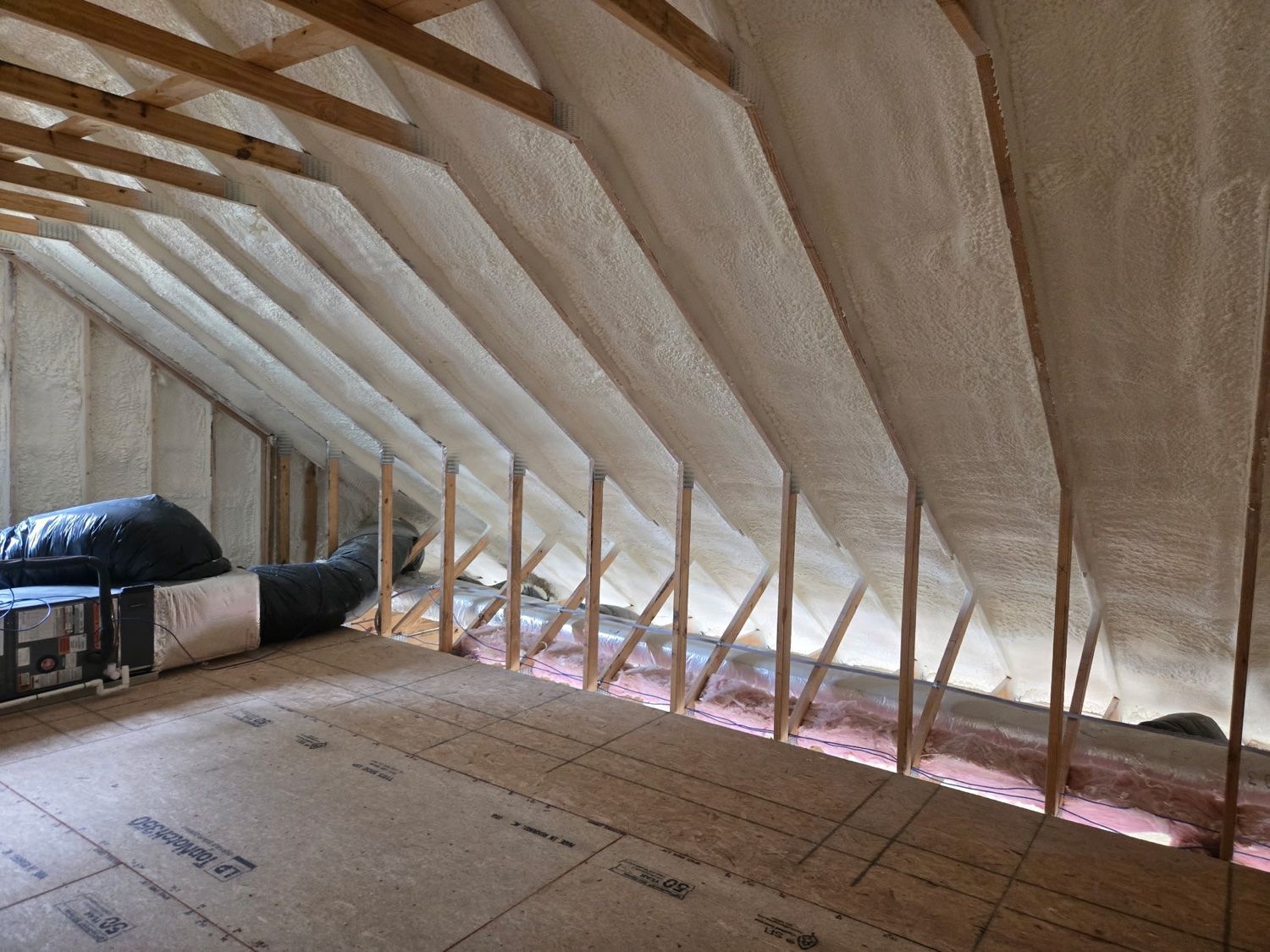
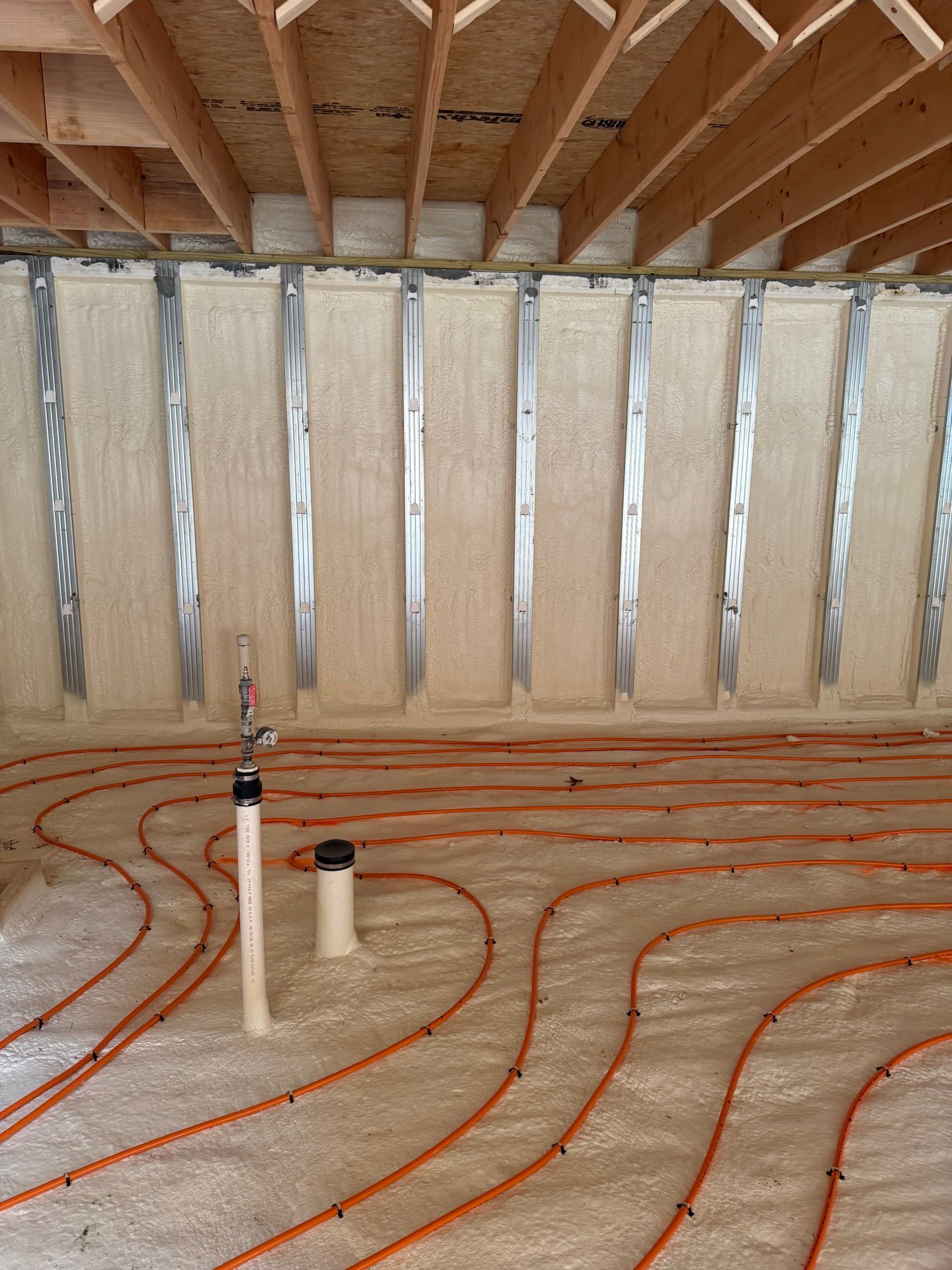
Spray foam does two jobs in one pass: it insulates and it seals the air leaks. In a shop, that second job matters just as much as the first. It sticks right to metal, wood, and block, fills the odd shapes around purlins, girts, and posts, and doesn't sag or slide down the wall over the years.
We spray PolyCon foam, and there are two types we choose from:
- PolyCon PC 2000 closed cell, R-7.1 per inch. This is our go-to for most metal buildings and pole barns. It packs a lot of R-value into a thin layer, so you don't lose much space, and it forms a strong air and moisture barrier right against the metal. It's also rigid once it cures, which adds some toughness to the wall.
- PolyCon PC 450 open cell, R-3.9 per inch. In a wood-framed garage or shop with room in the walls and rafters, open cell can be a budget-friendly way to air-seal and insulate. It's softer and needs more thickness for the same R-value, so it's not always the right pick for bare metal.
Which one fits depends on how your building is put together and how you plan to use it. We'll look at it with you and give you a straight answer, even if that means a smaller job than you expected.
A few things to think about before you spray
How warm do you want it? A shop you keep at 50 degrees so the paint doesn't freeze is a different job than one you keep at 65 so you can work in a T-shirt. That changes how thick we'd go and where we'd focus.
Roof, walls, or both? Heat rises, so the roof is usually the biggest win. But if the walls are bare metal, you'll feel the cold coming off them too. Some folks do the roof first and the walls the next year to spread out the cost.
Coverings and code. Foam in a building people work in often needs a protective covering or coating, depending on how the space is used and what your local code calls for. That might mean drywall, panels, or a fire-protective (intumescent) coating sprayed over the foam. We'll tell you what applies to your building and can price the coating with the foam so you're not surprised later.
Doors. Once the walls and roof are tight, a leaky overhead door will stand out. Good weatherstripping and bottom seals are cheap and make a real difference. We'll point out anything we see.
Timing. We spray year-round, but the earlier in the season you do it, the more of this winter you get to enjoy. A lot of people wish they'd called in September.
What people notice afterward
The most common thing we hear is that the heater finally shuts off. It reaches temperature and holds it instead of running all day. The shop is quieter, there are fewer drafts at floor level, and you can actually work out there in January.
About us
Sunrise Valley Spray Foam is an owner-operated company based in Morgantown, PA. An owner is on every job, so the people who quote your project are the same people doing the work. We do a lot of agricultural and pole barn work, and we travel regularly to the Philadelphia area and New Jersey for homes, barns, shops, and commercial buildings.
If your shop or garage is too cold to use, call or text us at 717-892-8212, or hit the Free Quote button. We'll come take a look and tell you what makes sense.
You might also like