Pipes Keep Freezing? It's Usually the Same Cold Spot
Every winter around Philadelphia and New Jersey, the first real cold snap brings the same phone calls. The kitchen sink won't run in the morning. A pipe under the bathroom burst while everyone was at work. A basement ceiling is suddenly dripping.
Here's what most people don't realize: when a pipe freezes, it's almost never bad luck. It's a sign that one particular part of the house is letting in cold air. If you fix the pipe and leave the cold spot alone, there's a good chance it'll happen again next January.
Why pipes freeze in the first place
Cold temperature alone usually isn't the whole story. Most of the time it's cold air moving across the pipe. A small gap at the rim joist, an open bay under a cantilevered floor, or a vent in a crawlspace lets outside air blow straight over the plumbing. Wind makes it worse, which is why pipes often freeze on the windy nights, not just the coldest ones.
Fiberglass doesn't stop moving air. Cold air goes right through it. So a pipe can be "insulated" on paper and still freeze.
The usual suspects
These are the spots we see most often in older Philly-area homes and across New Jersey:
- Sinks on outside walls. Kitchen and bathroom sinks against an exterior wall, especially on the north or windy side of the house. The cabinet under the sink stays cold because the wall behind it is leaky.
- Cantilevered floors. That bump-out where a kitchen or bedroom hangs a couple feet past the foundation. The underside is often barely insulated and open to the wind, and plumbing loves to run right through it.
- Crawlspaces. Vented crawlspaces under additions, sunrooms, and older homes pull cold air right past the supply lines.
- Rooms over garages. Pipes running in the garage ceiling, or through a cold garage wall, sit next to a space that's barely warmer than outside.
- The rim joist. Where the house framing sits on the foundation. Pipes that run along the top of the basement wall or exit the house there are right in the draft.
What you can do this week
You don't need to wait on a contractor to lower your risk this winter:
- Know where your main shutoff is. If a pipe does burst, shutting off the water fast saves a lot of damage. Make sure everyone in the house knows where it is.
- Open the cabinet doors under sinks on outside walls during cold snaps so house heat can get in there.
- Let a trickle run from a faucet that has frozen before, on the coldest nights.
- Disconnect garden hoses and shut off and drain outside spigots if they have an inside shutoff.
- Don't turn the heat way down when you're away. Keep it at a reasonable temperature.
- Go looking for drafts. On a cold, windy day, feel around the rim joist, the underside of cantilevers, and inside sink cabinets. If you feel moving air, you've found your problem.
These help, but they're patches. The real fix is to stop the cold air.
Where spray foam helps
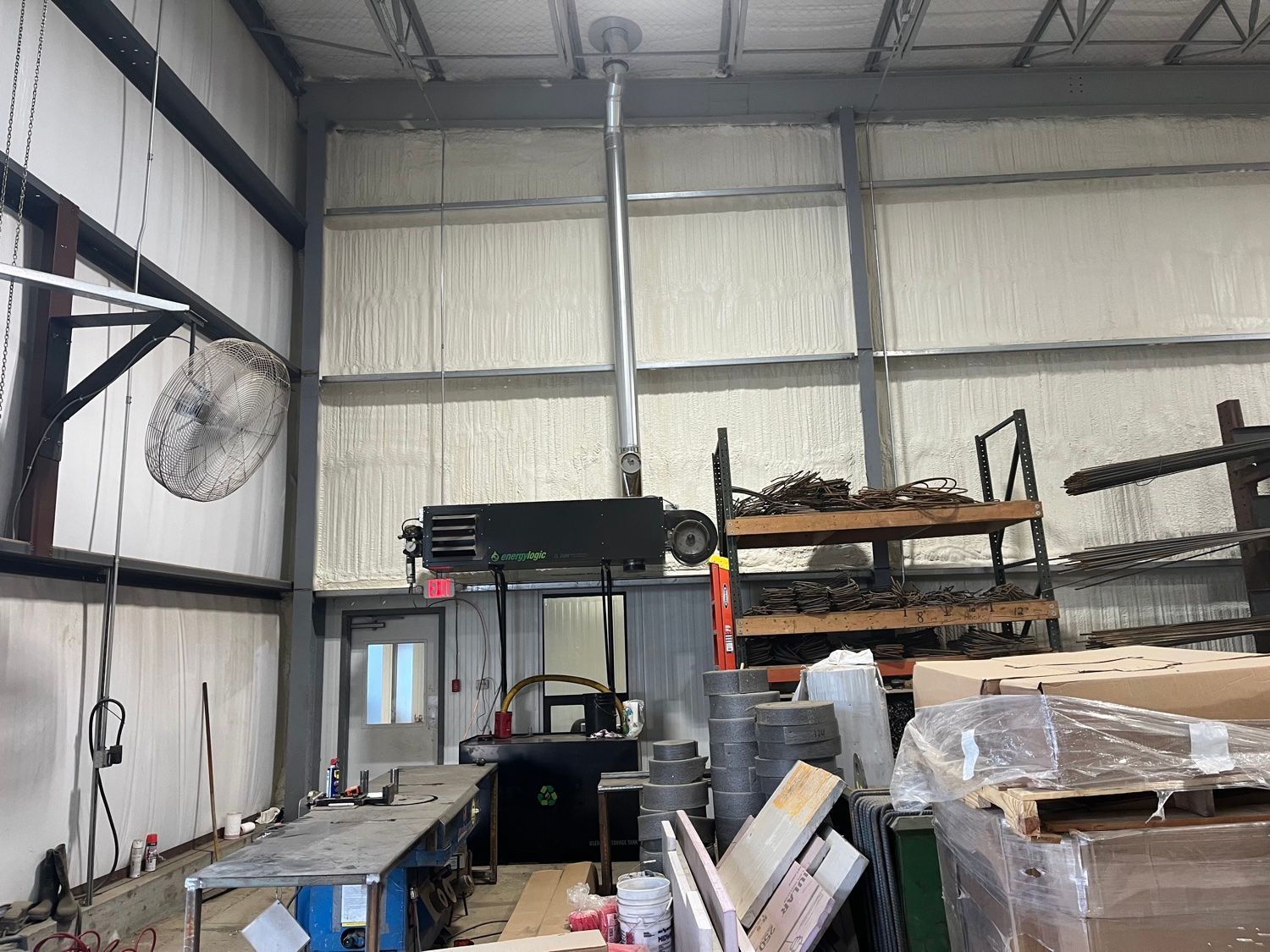
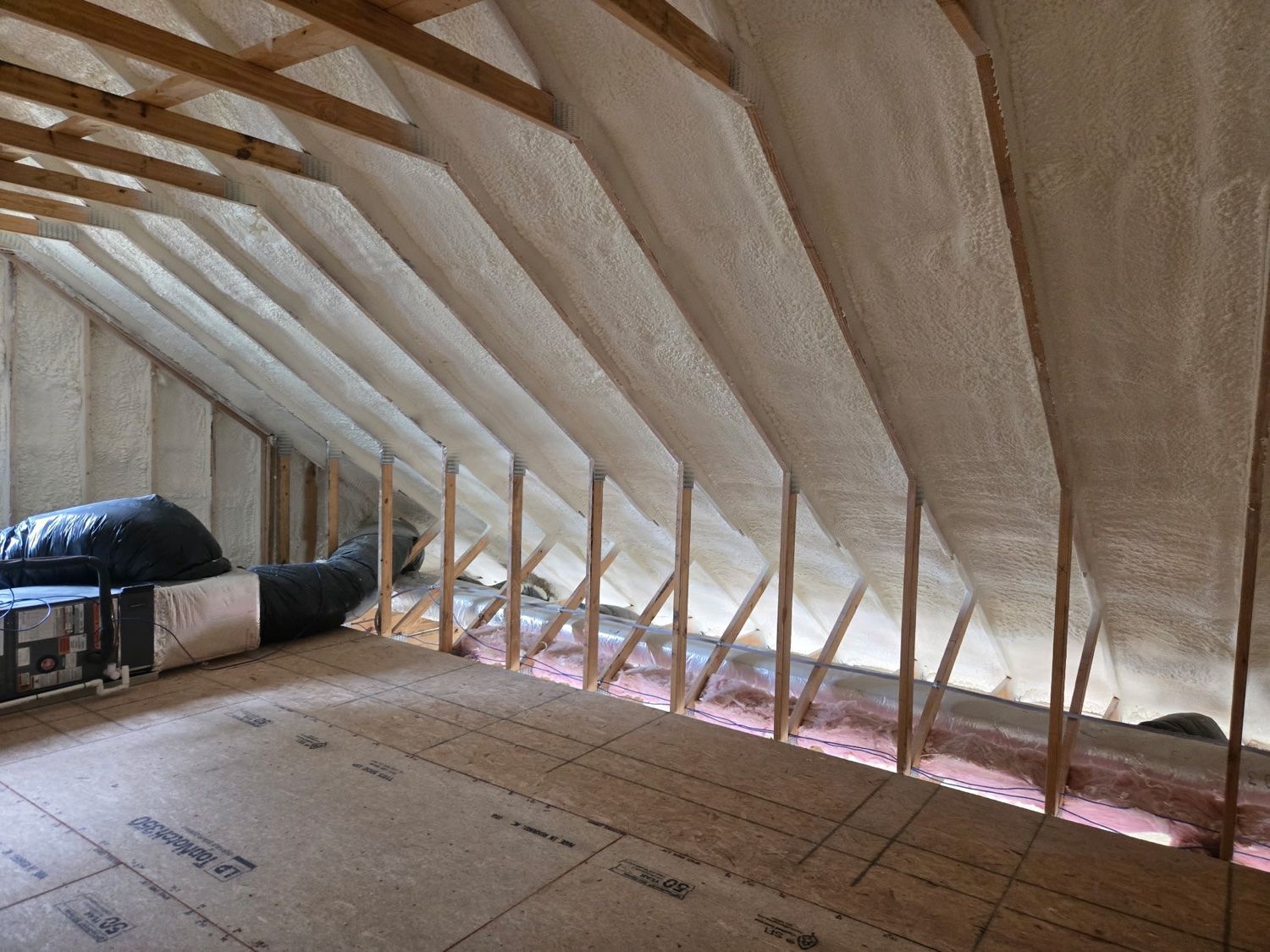
Spray foam goes on as a liquid, expands, and seals the cracks and gaps that let cold air in, so it's both the insulation and the air seal at the same time. That's the big difference from fiberglass when it comes to frozen pipes.
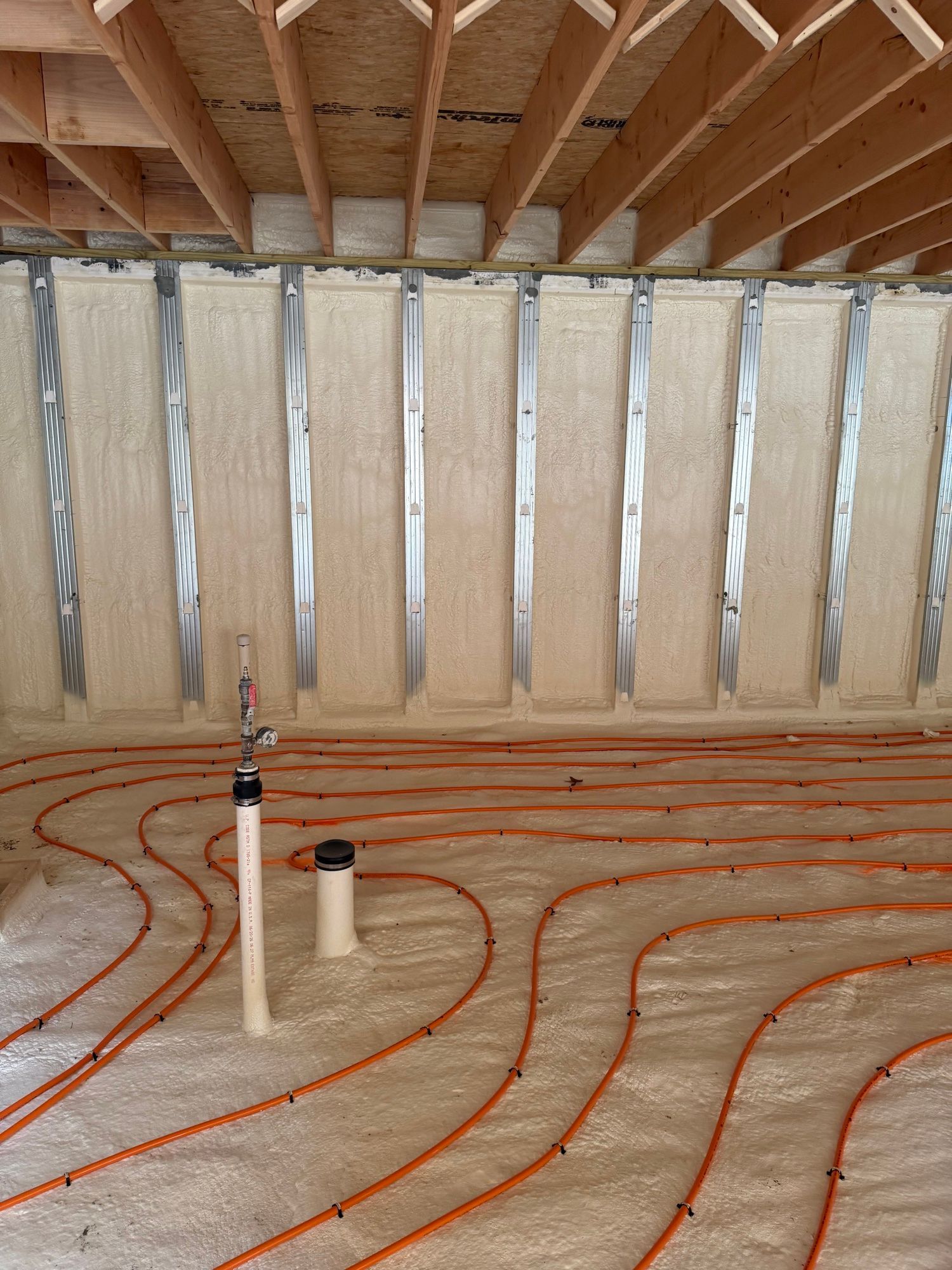
For rim joists, cantilevers, crawlspace walls, and garage ceilings under living space, we use PolyCon PC 2000 closed cell at R-7.1 per inch. It packs a lot of R-value into a thin layer, it holds up well against moisture, and it's a good fit for the tight, awkward spots where pipes tend to run.
In spots where we have more room and moisture isn't a concern, PolyCon PC 450 open cell at R-3.9 per inch can be a budget-friendly option. We'll be straight with you about which one makes sense where.
One important note: the idea is to keep the pipe on the warm side of the insulation. We seal and insulate the outside edge of the space, so the pipe stays in with the house heat instead of getting cut off from it. If a run is tricky, we'll talk it through with you or your plumber before we spray.
And as with any spray foam in a home, it needs to be covered where your local code calls for it (for example, drywall in living space). We'll tell you what applies to your project.
If a pipe already froze
If you've got a frozen pipe right now, shut off the water if you suspect a crack, and call a plumber. Don't use an open flame to thaw it. Once the plumbing is fixed, that's the time to call us about the cold spot that caused it, so you're not doing this again next year.
Why now
The best time to deal with a freeze-prone spot is before the January cold snaps. Cantilevers, rim joists, and crawlspaces are usually quick jobs, and sealing them makes the floors above feel warmer too.
About us
Sunrise Valley Spray Foam is an owner-operated company based in Morgantown, PA. An owner is on every job, so the people quoting your project are the same people doing the work. We travel regularly to the Philadelphia area and New Jersey for homes, barns, and commercial buildings.
If you've got a pipe that freezes every winter, or a spot you're worried about, call or text us at 717-892-8212, or hit the Free Quote button. We'll come find the cold spot and give you a straight answer.
You might also like